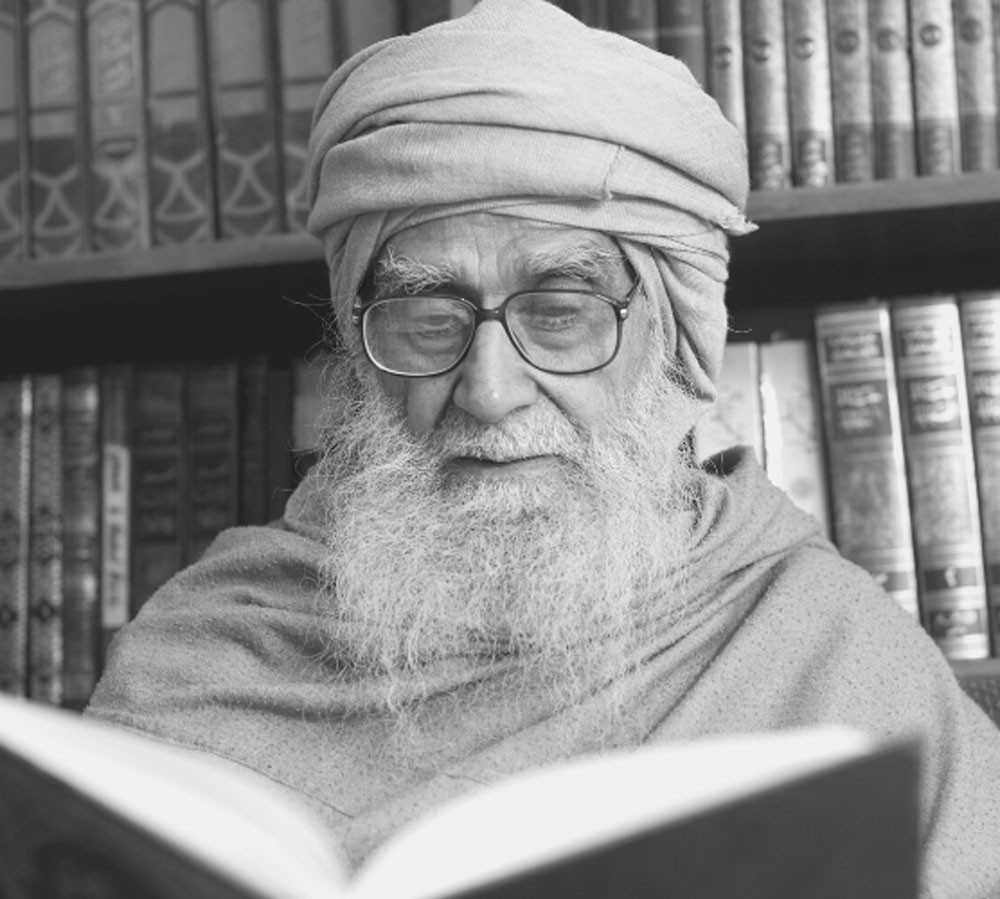
By Mushtaq Ul Haq Ahmad Sikander, New Age Islam
12 October 2026
Auraq-e-Hikmat (Diary 1985) presents Maulana Wahiduddin Khan’s daily reflections as a call for intellectual awakening, peaceful religious engagement, and moral self-reform.
Main Points:
- It presents diary-writing as a discipline of daily self-examination, turning ordinary experiences, science, history, and personal hardships into lessons on faith and accountability.
- It critiques Muslim intellectual decline, urging a scientific temperament of observation, questioning, and evidence rather than nostalgic pride in past achievements.
- It places dawah—peaceful persuasion, dialogue, education, and moral example—at the centre of Muslim renewal, while criticising political Islam and the pursuit of power.
- It reflects on the Seerah, patience, gratitude, death, and humility, presenting Islam as a source of practical wisdom and inner transformation.
- It also raises critical concerns about selective editing, historical oversimplification, and passages on early Islamic history that require careful, nuanced reading.
Auraq-e-Hikmat (Diary 1985): A Review
Author: Maulana Wahiduddin Khan
Publisher: Goodword Books, Noida, India
Year of Publication: 2026
Pages: 230
Price: Not mentioned
ISBN: 9789389766653
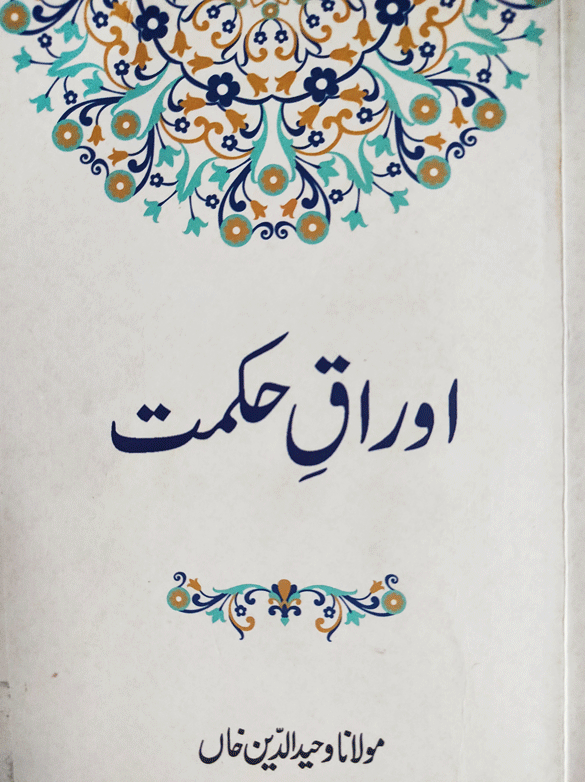
Maulana Wahiduddin Khan’s Auraq-e-Hikmat (Diary 1985) is not merely a diary; it is a living archive of a mind ceaselessly engaged with faith, history, science, politics, personal experience, and the moral condition of contemporary Muslims. Drawn from the author’s daily writings of 1985, the volume offers readers an intimate yet intellectually demanding entry into the thought-world of one of the most prolific Islamic thinkers of modern India. The book presents itself as a “treasure trove of profound wisdom, spirituality, and life-changing insights,” and, despite certain editorial and interpretive reservations, it largely fulfils that promise.
Maulana Wahiduddin Khan began maintaining a diary in 1983, and Auraq-e-Hikmat belongs to the third year of that sustained intellectual exercise. The present volume, however, does not reproduce every entry or every day of the original diary. This selective presentation raises an important question about editorial transparency: if a diary is published as a diary, readers naturally expect either a complete text or a clearly explained principle of selection. Omission without adequate explanation can create the impression of censorship, even where the intention may simply have been brevity, relevance, or editorial refinement. A diary derives much of its value from its continuity, its repetitions, its hesitations, and its unguarded moments. To remove these is to alter, however unintentionally, the character of the document itself.
Nevertheless, what survives in Auraq-e-Hikmat is rich enough to reveal the central concerns of Maulana Wahiduddin Khan’s intellectual and spiritual project. The diary moves easily from reflections on science and civilization to comments on Islamic history, from observations on politics and communal relations to deeply personal notes on illness, criticism, loneliness, patience, gratitude, death, and the afterlife. It is precisely this breadth that makes the book compelling. Maulana does not treat religion as a sealed compartment separate from life; rather, he sees every event public or private, political or scientific, painful or ordinary, as an occasion for moral and spiritual reflection.
The diary as intellectual practice
The first and perhaps most enduring lesson of Auraq-e-Hikmat is the value of daily self-examination. Maulana’s diary is built upon the conviction that a successful person continually audits life: what has been gained, what has been lost, and how the coming day may be planned more wisely.
For Maulana, writing is not simply a record of events. It is a discipline of thought. Each day demands that the writer pause, observe, interpret, and extract a lesson. This habit transforms ordinary experience into material for reflection. A scientific discovery, a political development, a personal disappointment, a quotation, an encounter with another scholar, or even a fleeting observation about human behaviour becomes an entry point into larger questions of faith, purpose, and accountability.
The diary therefore resists the common tendency to divide life into “religious” and “secular” domains. For Maulana, the entire universe is a field of divine signs. Science, history, nature, and human affairs all point, directly or indirectly, towards the reality of God, the transience of worldly power, and the moral responsibility of human beings. The reader repeatedly encounters the idea that the signs of God are present all around us, but most people fail to decipher them because they lack attention, humility, and intellectual preparation.
This is one of the book’s greatest strengths. It encourages readers not to passively receive religion as inherited tradition, but to observe life attentively and derive meaning from it. In an age when religious discourse is often reduced to slogans, rituals, or political identity, Maulana’s diary insists that faith must be intelligent, reflective, and morally serious.
Science, decline, and Muslim introspection
A recurring theme in Auraq-e-Hikmat is the relationship between Muslims and modern science. Maulana Wahiduddin Khan repeatedly argues that Muslims have fallen behind in scientific achievement because they have failed to cultivate a scientific temperament. For him, the problem is not merely the absence of laboratories, universities, or technological infrastructure. It is the absence of a mindset that values observation, experimentation, questioning, evidence, and rational inquiry.
Maulana’s concern is especially relevant for a community that often speaks nostalgically of its past scientific greatness while remaining disconnected from the demands of present-day knowledge. He warns against the false pride of past glory. Muslims, he suggests, have too often looked backwards towards the achievements of earlier civilizations instead of confronting contemporary challenges with humility, creativity, and hard work. The diary repeatedly contrasts the modesty and curiosity that once enabled intellectual progress with the ego, complacency, and self-congratulation that now inhibit it.
This critique is necessary and courageous. Muslim societies cannot address educational backwardness by merely invoking the memory of Ibn Sina, Al-Khwarizmi, Ibn al-Haytham, or other great figures of the past. Honouring the past becomes meaningful only when it inspires present action. Maulana’s insistence on scientific temper is therefore not a surrender to Western modernity; it is a call to recover an authentic Islamic intellectual ethic: to seek knowledge, verify claims, understand natural laws, and use reason in the service of truth.
Yet the diary is not free from overstatement. On page 54, Maulana laments that Muslims have produced no reformer comparable to Raja Ram Mohan Roy, one who could usher in scientific temper and acceptance of modern knowledge. This comparison is historically incomplete and unfair. Sir Syed Ahmad Khan, whose Aligarh movement sought precisely to reconcile Muslim religious life with modern education and scientific learning, represents one of the most significant examples of such reform in South Asian Islam. To ignore Sir Syed while praising Raja Ram Mohan Roy weakens the argument. It also reflects a broader tendency, visible at points in the diary, to frame Muslim reform as though it must begin from outside the Islamic tradition rather than from within its own intellectual resources.
Similarly, the spelling of “Mewat” as “Meraat” on page 55 is a small but noticeable editorial lapse. In a book that repeatedly emphasises precision, observation, and scientific method, such errors remind the reader that editorial care is itself a moral and intellectual responsibility. A diary may preserve spontaneity, but a published edition must also ensure accuracy.
Dawah as the central mission
At the heart of Maulana Wahiduddin Khan’s thought lies dawah: the peaceful invitation to Islam through persuasion, dialogue, example, and moral conduct. Again and again, the diary returns to the conviction that Muslims have abandoned their real task. Instead of engaging in constructive communication of faith, they have become preoccupied with complaints, political confrontation, and reactions to perceived hostility.
Maulana’s argument is stark: Muslims are experiencing decline and oppression because they have neglected dawah despite being the final upholders of divine truth. This is a challenging claim, and it should not be accepted uncritically. The suffering of Muslim communities across the world cannot be reduced to a single religious failure. Colonialism, economic inequality, state violence, Islamophobia, geopolitical conflict, and institutional discrimination all have real historical and political causes. To explain Muslim marginalisation solely through the absence of dawah risks oversimplifying complex realities.
Still, Maulana’s emphasis has moral value. He reminds Muslims that victimhood cannot become a permanent identity. A community that constantly speaks of hurdles, conspiracies, and enemies may lose the creative energy required to build institutions, educate its youth, serve society, and communicate its values peacefully. The diary’s repeated message is that Muslims must move from complaint to construction. They must become problem-solvers rather than merely protesters.
This is where Maulana’s critique of contemporary Islamist movements becomes particularly sharp. He criticises movements such as the Muslim Brotherhood and Jamaat-e-Islami for placing excessive emphasis on political power, electoral competition, and armed struggle, while insufficiently prioritising dawah. In his view, their failures in electoral politics and their eventual isolation demonstrate the limits of a politics that seeks power before it has created a broad moral and intellectual base in society.
The critique is powerful, though it requires nuance. Islamist movements have diverse histories, and their political engagement cannot be dismissed as wholly fruitless. In certain contexts, political participation has protected communities, expanded education, and given voice to marginalized groups. Yet Maulana is right to warn that when religious movements become obsessed with capturing state power, they may sacrifice the ethical universality of faith. Religion then risks being reduced to a programme of political mobilisation rather than remaining a call to moral transformation.
Maulana’s alternative is not passivity. It is patient, long-term cultural work: education, dialogue, publication, personal reform, and peaceful persuasion. His own life is marked by prolific writing, public engagement, and the founding of the Al-Risala mission which embodies this approach. The diary repeatedly presents Al-Risala not simply as a magazine but as a project for creating a positive mindset among Muslims.
Islamic history and contested interpretations
Auraq-e-Hikmat also contains reflections on Islamic history, especially the early conflicts that continue to shape Sunni-Shia and broader Muslim debates. One of the most controversial passages appears on page 40, where Maulana discusses what he regards as a mistaken notion of hikmah (wisdom) concerning those companions who did not fight against Yazid. He suggests that many companions refrained from opposing Yazid despite the fact that Yazid’s father, Amir Muawiya, had been responsible for the deaths of thousands of Prophet’s companions (Suhaba).
This passage is likely to disturb many readers, and rightly so. The language risks appearing dismissive of the profound moral and political questions surrounding Karbala, Yazid’s rule, and the martyrdom of Imam Husayn. More seriously, it may be perceived as reflecting a Nasibi tendency, an attitude of hostility towards the Ahl al-Bayt, though it would be unfair to reduce Maulana’s entire theological outlook to one passage. His broader work repeatedly emphasises peace, dialogue, and avoidance of sectarian conflict.
Yet the passage reveals a recurring problem in Maulana’s historical reasoning: the tendency to derive sweeping political conclusions from selective readings of early Islamic history. The refusal of some companions to fight Yazid cannot be explained merely through a generalized appeal to wisdom or prudence. It must be situated within the complex political conditions of the time, the fragmentation of the Muslim community, the coercive power of the Umayyad state, and the differing moral judgements made by different companions.
A responsible historian must allow complexity. A religious thinker may draw lessons from history, but he must not flatten historical tragedy into a convenient ideological lesson. Karbala is not merely an episode in political prudence; it remains an enduring symbol of moral resistance against tyranny, sacrifice, and the refusal to legitimise unjust power. Any discussion of Yazid and Imam Husayn must retain the ethical gravity of that event.
The Seerah and practical wisdom
One of the more constructive dimensions of the diary is Maulana’s use of the Seerah, the life of the Prophet Muhammad, as a source of practical guidance. He does not treat the Prophet’s life merely as a collection of miraculous events or devotional stories. Instead, he approaches it as a model of strategic patience, moral discipline, communication, reconciliation, and constructive action.
This approach has considerable value. The Seerah becomes relevant when it teaches believers how to respond to adversity without surrendering to despair or hatred. The Prophet’s patience in Makkah, his willingness to negotiate, his capacity to build alliances, and his eventual establishment of a just community in Madinah offer lessons that extend beyond ritual religion. Maulana’s readings often highlight these practical dimensions: the importance of timing, restraint, planning, and maintaining hope in difficult circumstances.
At the same time, the diary sometimes presents the Seerah through a highly problem-centred lens. The Prophet’s life becomes chiefly a manual for managing conflict, criticism, and political setbacks. This is not wrong, but it is incomplete. The Seerah is also a source of spiritual beauty: compassion, worship, family life, mercy, forgiveness, humility, and love of God. A more balanced reading would allow these dimensions greater space.
Criticism, ego, and the scholar’s burden
Auraq-e-Hikmat is unusually candid about Maulana’s personal experience of criticism. He writes of being attacked, misunderstood, and opposed by fellow Muslims. These entries reveal the emotional cost of public intellectual life. A thinker who challenges dominant religious attitudes, questions political Islam, or advocates dialogue with non-Muslims will inevitably invite hostility.
Maulana presents himself as bearing such criticism for the sake of dawah and writing. There is dignity in this perseverance. The diary shows that intellectual work is not performed in a vacuum; it demands courage, endurance, and a willingness to remain committed to one’s principles despite social disapproval.
However, readers should also notice the danger of self-victimisation. A thinker who sees every criticism as persecution may become less open to genuine correction. Maulana himself criticises ulema for possessing limited knowledge while being full of ego, an ego that prevents them from recognising their own ignorance. This is a valuable warning, but it applies to all scholars, including those who position themselves as reformers. Intellectual humility requires not only criticising others’ ego but also examining one’s own certainties.
The diary is strongest when it turns this critical gaze inward. Its reflections on patience, gratitude, death, and accountability reveal a person aware of human frailty. Maulana reminds readers that human beings often imagine themselves free and unaccountable, whereas true freedom lies in recognising responsibility before God. This is an important corrective to modern individualism, which frequently equates liberty with the absence of moral limits.
Politics, power, and religious exploitation
Maulana’s comments on politics are among the most thought-provoking parts of the diary. He observes that people do not necessarily submit to proof; they often submit to power. This is a sobering insight into political life. Truth alone does not always triumph in public affairs; institutions, wealth, media, military strength, and organisational discipline often determine whose voice is heard.
Yet Maulana does not conclude that Muslims should pursue power by any means. On the contrary, he condemns the exploitation of religion for political ends. He recognises that religious sentiment can be manipulated by leaders who invoke God, community honour, or sacred history in order to mobilise people for worldly goals. This critique remains profoundly relevant. Across the Muslim world, and beyond it, religion continues to be used both to inspire moral action and to justify exclusion, violence, and authoritarianism.
The diary’s rejection of violence is especially important. Maulana repeatedly argues that violence is counterproductive. It may produce short-term emotional satisfaction or political visibility, but it ultimately damages the moral credibility of a movement and alienates potential supporters. For him, peaceful means are not merely tactical choices, they are expressions of faith in the power of truth, patience, and dialogue.
This position has obvious relevance in conflict-ridden societies, including Kashmir. Maulana’s insistence that communities must resist despair and constructively address their problems offers a moral alternative to cycles of resentment and retaliation. His message is not that injustice should be ignored, but that resistance to injustice must not reproduce the very dehumanisation it seeks to overcome.
Islam, exclusivism, and coexistence
The diary also reflects Maulana’s conviction that Islam is the only true religion. This claim will be accepted by believing Muslims as a statement of faith, but it requires careful handling in a plural society. Religious conviction need not become social arrogance. A believer may hold that Islam presents the final and complete divine guidance while still treating people of other faiths with justice, dignity, and sincere goodwill.
Maulana’s own emphasis on adjustment, dialogue, and dropping an anti-Hindu tone reflects an attempt to develop this more constructive posture. In the Indian context, where Muslims live as a significant religious minority amid a plural and often polarised society, such an approach has practical importance. Muslims must be able to affirm their faith without adopting a language of permanent confrontation with Hindus or other communities.
At times, however, the diary’s language of “adjustment” can appear overly strategic. Adjustment should not mean silence in the face of injustice, nor should it mean diluting religious identity merely to gain social acceptance. Genuine coexistence requires mutual respect, not one-sided accommodation. The ideal is neither confrontation nor assimilation, but confident participation in a shared civic and moral space.
Language, style, and literary quality
The Urdu of Auraq-e-Hikmat is lucid, reflective, and accessible. Maulana writes with the confidence of a seasoned author. His sentences often carry aphoristic force; many entries can be read as independent meditations. This makes the book suitable not only for continuous reading but also for daily reflection.
The distinction between “traditional acquired Islam” and “discovered Islam” is central to Maulana’s thought. By traditional acquired Islam, he means religion received through inherited authority, customary practice, and accepted formulations. By discovered Islam, he means a faith personally understood through reflection on the Quran, nature, history, and human experience. This distinction is intellectually stimulating. It invites believers to move beyond imitation and make faith a lived, conscious reality.
However, the dichotomy can become too sharp. Tradition is not inherently opposed to discovery. The accumulated wisdom of Muslim scholarship, jurisprudence, spirituality, and institutional life provides indispensable resources for understanding revelation. A healthy religious life requires both: respect for tradition and the courage to reflect anew.
Death, gratitude, and spiritual discipline
Some of the most moving entries in Auraq-e-Hikmat concern death, the afterlife, patience, and gratitude. Maulana returns repeatedly to the awareness that life is brief and that worldly achievements are temporary. This awareness is not meant to produce pessimism. Rather, it is intended to awaken moral seriousness.
Patience, for Maulana, is not passive resignation. It is the capacity to endure hardship while continuing to act wisely. Gratitude, similarly, is not merely a private feeling, it is a way of seeing the world. One who is thankful to other human beings learns humility, and this humility becomes a path towards thankfulness to God, the ultimate giver of all gifts.
These reflections give the diary its spiritual depth. Beneath the political commentary, criticism of Islamist movements, and reflections on Muslim decline lies a persistent concern with the transformation of the individual soul. Maulana believes that no community can be reformed unless its members cultivate inner discipline: truthfulness, humility, gratitude, patience, and accountability.
Editorial concerns and intellectual honesty
The most significant reservation about Auraq-e-Hikmat concerns its editorial presentation. Since Maulana began writing his diary daily in 1983, a volume devoted to 1985 naturally invites the expectation of a continuous record. The fact that not all entries and days are included needs clear explanation. If entries have been omitted because of repetition, irrelevance, privacy, or editorial length, readers should be told so. If passages have been removed because they are politically sensitive, theologically controversial, or unflattering to the author’s later positions, that too must be acknowledged.
A diary is valuable precisely because it preserves the unfinished, contradictory, and evolving nature of thought. Sanitising it may make the author appear more consistent, but it also diminishes the historical and intellectual value of the work. Intellectual honesty demands that editors allow readers to encounter thinkers in their complexity, including their errors, prejudices, uncertainties, and changing views.
This is not a demand for disrespect. It is a demand for scholarly integrity. Maulana Wahiduddin Khan himself valued truth, evidence, and open reflection. A faithful edition of his diary should honour those values by resisting excessive censorship and by presenting the text with transparency.
A book worth reading critically
Auraq-e-Hikmat (Diary 1985) is a valuable book because it allows readers to witness the formation of Maulana Wahiduddin Khan’s distinctive worldview. It reveals a thinker deeply anxious about Muslim decline, committed to peaceful dawah, fascinated by science, critical of political Islam, and personally acquainted with criticism and hardship. It also reveals the limitations of that worldview: occasional historical oversimplification, insufficient engagement with Muslim reformers such as Sir Syed Ahmad Khan, a tendency towards sweeping generalisation, and editorial choices that raise questions about completeness and transparency.
The book should therefore be read neither as unquestionable scripture nor as a disposable collection of dated opinions. It should be read critically, as the diary of a major Muslim intellectual whose insights remain relevant even where his conclusions require correction. Its enduring contribution lies in its insistence that faith must be thoughtful, peaceful, constructive, and personally transformative.
Maulana Wahiduddin Khan’s central message remains compelling: Muslims must move beyond nostalgia, complaint, and reactive politics. They must cultivate knowledge, serve society, communicate their faith with wisdom, and recognise the divine signs embedded in everyday life. Auraq-e-Hikmat is at its best when it calls readers to this task. Its weaknesses do not erase its value; rather, they remind us that even influential thinkers must be read with discernment.
For students of Islamic thought, educators, researchers, and general readers interested in the intellectual history of contemporary Indian Islam, this diary is a rewarding and provocative text. It invites admiration for its spiritual sincerity, debate over its historical judgments, and reflection on its enduring call for a more reflective, peaceful, and constructive Muslim life.
Maulana Wahiduddin Khan, who authored more than 200 books and was widely known as an Indian Islamic scholar and peace activist, left behind a vast body of writing devoted to Quranic wisdom, peaceful coexistence, and spiritual reflection. Auraq-e-Hikmat adds an intimate chapter to that legacy: not a polished treatise, but a record of a mind thinking aloud, seeking wisdom in the ordinary flow of daily life.