By Mushtaq Ul Haq Ahmad Sikander, New Age Islam
15 October 2026
Maulana Wahiduddin Khan Diagnoses Extremism as Spiritual Excess, Not Authentic Islam
Main Points
- The book presents ghulu—excess or extremism—as a spiritual disorder that distorts Islam by replacing mercy, humility and ethical responsibility with rigidity and zeal.
- Khan argues that extremism often grows from collective decline, humiliation and lost confidence, when political failure is converted into religious certainty and resentment.
- It criticises forms without spirit: rituals, symbols and sectarian markers become hollow when separated from compassion, justice, truthfulness and service to humanity.
- It highlights Khan’s opposition to sectarianism, showing how religious differences can harden into exclusion, division and institutional hostility.
- It also warns against “fatwa activism” and politicised religion, urging moderation, knowledge, patience, dialogue and constructive action over slogans and violence.
…
Islam and Extremism
Author: Maulana Wahiduddin Khan
Translated and edited by: Prof. Farida Khanam, Dr. Rajat Malhotra and Maulana Farhad Ahmad
Publisher: Goodword Books, New Delhi NCR, India
Year of publication: 2026
Pages: 95
Price: Not Mentioned
ISBN: 9789347638183
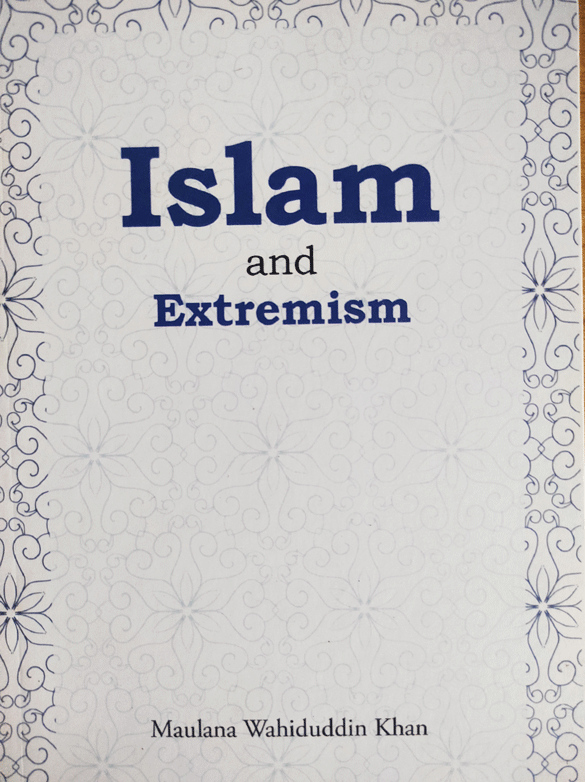
Maulana Wahiduddin Khan’s Islam and Extremism is a compact yet forceful intervention in one of the most urgent debates confronting contemporary Muslims: the relationship between faith, fanaticism and violence. In ninety-five pages, the late Indian Islamic scholar and peace activist argues that extremism (ghulu) is not an expression of Islam but a distortion of it, born when believers lose sight of religion’s inner spirit and reduce it to external forms, sectarian identities and political ambitions. The book is therefore less a conventional academic treatise than a moral and spiritual corrective addressed directly to the Muslim community.
Khan was among the most prominent Indian voices for peace, dialogue and non-violence, and his writings consistently sought to separate Islam’s ethical core from the militant political ideologies that claim to speak in its name. Islam and Extremism continues that project with characteristic clarity. It is brief, accessible and uncompromising, it does not offer sociological nuance or policy analysis so much as a firm theological diagnosis of the disease of extremism and a prescription for its cure.
Ghulu: The central category
The conceptual heart of the book is the Arabic term ghulu, meaning excess, exaggeration or extremism. For Khan, ghulu is not merely a behavioural failing; it is a spiritual disorder that corrupts one’s understanding of religion itself. He draws upon the Qur’anic warning, “Do not go to excess in your religion” (4:171), and upon prophetic traditions that identify excess in religion as a cause of the ruin of earlier communities.
This framing matters. Khan does not present extremism as an alien intrusion into Islam, wholly manufactured by external forces or modern geopolitics. Rather, he treats it as a recurring temptation within religious life: the temptation to make faith harder, harsher and more absolute than it needs to be, to turn divine mercy into human rigidity and to mistake zeal for piety. In this sense, the book speaks not only to militants but to every believer who has ever confused religious seriousness with religious severity.
Khan’s argument is especially valuable because it avoids two simplistic positions. He rejects the claim that Islam itself produces extremism, but he also refuses to excuse Muslims by blaming only colonialism, Western intervention or media stereotyping. Extremism, for him, has internal causes within Muslim religious culture, and these must be acknowledged honestly before they can be overcome. This intellectual honesty gives the book its moral force.
Extremism as a symptom of decline
One of the most persuasive ideas in Islam and Extremism is Khan’s contention that extremism often emerges during periods of collective decline. When a community loses confidence, power, intellectual vitality or moral direction, it may seek compensation in exaggerated religious claims. Unable to accept defeat or marginalisation, it turns faith into a weapon of resentment.
Khan’s insight is psychologically and historically compelling. Extremism frequently flourishes not among communities secure in their faith, but among those who feel humiliated, defeated or deprived of dignity. The extremist then promises restoration: political glory, moral purity, revenge against enemies, or a return to an imagined golden age. Religion becomes a vehicle for collective wounded pride rather than a path towards God-consciousness, humility and ethical responsibility.
This analysis has particular relevance for the modern Muslim world. The collapse of empires, the experience of colonisation, the rise of nation-states and the perceived dominance of Western power have all contributed to a crisis of Muslim self-confidence. Khan argues that some Muslims have responded not by renewing knowledge, ethics and spirituality, but by politicising religion and treating the recovery of worldly power as the central religious mission. Such a response, he insists, mistakes the symptoms of decline for the remedy.
The danger is that political failure is then converted into theological certainty. If Muslims are suffering, the extremist reasons, it must be because they have abandoned “true Islam.” If the world is unjust, the answer must be confrontation. If peaceful means appear slow, violence becomes tempting. Khan rejects this entire chain of reasoning. For him, the cure for decline lies in intellectual renewal, moral reform, patience, constructive engagement and trust in God, not in the politics of rage.
Form without spirit
A recurring theme in the book is the distinction between the outer form of religion and its inner spirit. Khan argues that extremism arises when Muslims emphasise rituals, symbols, dress, slogans and sectarian markers while neglecting the ethical and spiritual substance of faith: mercy, justice, compassion, humility, truthfulness and concern for others.
This critique is not a call to abandon religious practice. Khan does not advocate a diluted, purely private spirituality. Rather, he insists that external observance must be animated by inner transformation. Prayer without humility, fasting without compassion, religious identity without justice, and scholarship without wisdom all become hollow. Worse, they can become instruments of arrogance: the believer begins to measure piety by conformity to appearances rather than by proximity to God and service to humanity.
Khan’s warning is particularly relevant in an age of performative religiosity. Social media has made it easier than ever to display religious identity through symbols, slogans and public condemnation. Yet the deeper disciplines of faith, self-restraint, forgiveness, patience, honest self-criticism and concern for the vulnerable, remain less visible. The book reminds readers that Islam is not merely a set of external markers but a comprehensive orientation of the heart and mind.
The critique also applies to religious discourse. Khan is suspicious of hair-splitting debates that consume enormous energy while producing little moral or spiritual fruit. Such debates may give participants a sense of scholarly superiority, but they can distract from the essential purposes of religion. When juristic differences become grounds for mutual exclusion, when minor points of practice become tests of loyalty, and when sectarian identity replaces universal ethical responsibility, religion has been reduced to an ideology of division.
Sectarianism and the fragmentation of faith
Khan’s criticism of sectarianism is one of the book’s most timely elements. He observes that the proliferation of sects and sub-sects often reflects a failure to preserve the unity and breadth of Islamic teaching. The construction of mosques on sectarian lines, for example, becomes for him a symbol of a deeper problem: religion has been converted into a badge of group identity rather than a shared path towards God.
This observation will resonate with readers familiar with the Muslim world’s internal divisions. Mosques, madrasas, religious organisations and even burial practices can become markers of affiliation. Differences in jurisprudence, theology or spiritual method, which might otherwise be handled with humility and scholarly dialogue, are transformed into boundaries of belonging and exclusion.
Khan does not deny the reality of differences among Muslims. His point is that differences need not become divisions. A mature religious community can disagree without demonising; it can maintain distinct traditions without turning them into instruments of hostility. The alternative, sectarian pride, polemical excess and institutional separation, weakens the community and betrays the Qur’anic ideal of unity.
For educators, students and community leaders, this part of the book is especially useful. It invites reflection on how religious institutions may unintentionally reproduce sectarianism. Are mosques spaces of welcome or fortresses of exclusivity? Do sermons cultivate compassion and responsibility, or merely reinforce group superiority? Do educational curricula encourage critical understanding, or rote repetition of inherited polemics?
Moderation, success and worldly responsibility
Khan links religious moderation to a realistic understanding of success. He argues that Muslims must not confuse spiritual mission with the pursuit of immediate worldly triumph. Success in this world may come through patience, knowledge, hard work, cooperation and moral integrity, it is not guaranteed by slogans, confrontation or the demand for instant political power.
This is a crucial corrective to extremist thought. Extremist movements often promise a dramatic transformation: the establishment of an ideal order, the defeat of enemies, or the restoration of lost glory. Khan counters such promises with a more sober view of history. Civilisations rise through constructive effort, education, economic creativity, ethical discipline and peaceful cooperation. They do not rise through violence, isolation or perpetual grievance.
His emphasis on moderation should not be mistaken for passivity. Khan is not asking Muslims to accept injustice silently. Rather, he asks them to respond to adversity with wisdom rather than desperation, and to distinguish between legitimate struggle and destructive extremism. The moderate path requires courage precisely because it refuses the emotional satisfaction of hatred and revenge.
Fatwa activism and the misuse of authority
Another important target of the book is what may be called “fatwa activism.” The tendency to issue religious verdicts hastily, publicly and polemically, often without adequate knowledge, context or responsibility. In Khan’s view, such activism turns religious authority into a tool of confrontation. It encourages believers to seek certainty through condemnation rather than wisdom through reflection.
The problem is not the institution of fatwa itself. Islamic tradition has long recognised the need for qualified scholars to guide believers in complex matters. The problem arises when fatwas become instruments of celebrity, sectarian warfare or political mobilisation. A verdict issued without understanding can damage lives, deepen divisions and distort the compassionate spirit of Islamic law.
Khan’s critique is especially relevant in the digital era, where religious pronouncements circulate instantly and often without scholarly accountability. The authority to speak in the name of Islam carries a heavy responsibility. Islam and Extremism reminds readers that religious knowledge must be joined to humility, caution and awareness of consequences.
Style, translation and accessibility
The book’s brevity is both a strength and a limitation. In fewer than a hundred pages, Khan communicates his central argument with remarkable economy. The prose is direct, repetitive in a deliberate, sermon-like way, and accessible to general readers. This makes the book suitable for students, teachers, community study circles and readers approaching the subject for the first time.
The translation and editing by Prof. Farida Khanam, Dr. Rajat Malhotra and Maulana Farhad Ahmad appear designed to preserve Khan’s plain, persuasive voice. The result is a text that feels less like an academic monograph and more like a sustained exhortation. Some readers may desire more detailed engagement with primary sources, historical case studies or contemporary extremist movements. Yet the book’s concision is also its appeal, it distils a lifetime of reflection into a clear moral argument.
Khan’s broader intellectual project consistently emphasised peace, dialogue and a critique of the political interpretation of Islam, which he saw as a modern ideology incompatible with the Prophet’s method of peaceful persuasion. Islam and Extremism belongs firmly within that tradition. It offers not merely a defence of Islam against its violent mis interpreters, but an internal reformist call to Muslims themselves.
A necessary book
Islam and Extremism is a necessary book because it addresses extremism from within the Islamic tradition. It does not treat Muslims as objects of external scrutiny, it addresses them as moral agents capable of self-correction. Its central message is simple but demanding. Extremism is ghulu, and ghulu destroys both religion and community.
The book’s enduring value lies in its refusal to let faith be captured by anger, sectarianism or the hunger for power. Khan asks Muslims to recover the inner spirit of Islam. Mercy before severity, unity before faction, wisdom before slogans, and constructive action before destructive reaction. In an age when religious identity is easily weaponised, this is a message of profound importance.
For readers seeking a short, clear and spiritually serious critique of extremism, Islam and Extremism is highly recommended. It is not an exhaustive study of radicalisation, nor does it claim to be. It is something perhaps more urgent, a reminder that the greatest threat to religion may not come from its enemies, but from those who claim to defend it while betraying its spirit.