FROM THE DESK OF THE EDITORIAL DIRECTOR
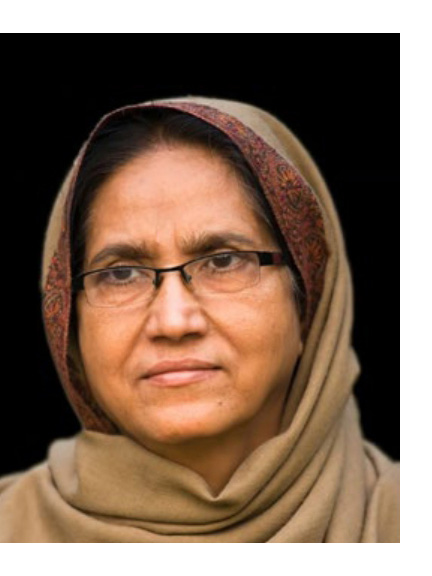 Prof Farida Khanam is an author, editor, translator, public speaker and former professor of Islamic Studies at Jamia Millia Islamia, New Delhi. Among her books are ‘A Simple Guide to Islam’ and ‘A Study of World’s Major Religions’. She has translated into English many books authored by Maulana Wahiduddin Khan. Currently the chairperson of CPS International, she is a regular contributor of articles to various publications. Prof Khanam has edited Maulana’s English translation of the Quran and has also translated his Urdu commentary on the Quran into English. She can be reached at [email protected]
ONE LIFE, TWO RESPONSIBILITIES
The Prophet Muhammad stated that it is better for a person to earn with his own hands than to depend on others (Bukhari).
If you want to take, you should try to give. I t is only in giving to others that we can have our share too.
Once I met an educated Muslim who spoke with visible dissatisfaction. He said that modern people have become nothing more than “earning animals”: they study, acquire degrees, secure jobs, and spend their lives making money. His remark contained a valid concern, but it did not reflect the whole picture of human responsibility.
In reality, there are two meaningful ways of living. One is what may be called one man, one mission. In this case, a person devotes his entire life to a higher purpose and treats material needs as minimal. The other is one man, two missions. Here, a person divides his life between earning a lawful livelihood and pursuing the real purpose of his existence. Both ways are valid, and both can lead to success if adopted with sincerity.
The truth is that every human being needs a clearly thought-out purpose in life. Without purpose, activity becomes mechanical and exhausting. The Quran draws attention to this balance when it says that God has made people stewards on the earth (6:165). Stewardship requires responsibility, not withdrawal from life.
Earning a livelihood is not opposed to higher purpose. It is a necessity of human life. The Prophet Muhammad stated that it is better for a person to earn with his own hands than to depend on others (Bukhari). This shows that earning is not inferior; it is honourable when kept within limits.
At the same time, material activity cannot be allowed to consume the whole of life. The Quran reminds us: “Seek the Hereafter through what God has given you, but do not forget your share of the world.” (28:77) This verse
presents a complete philosophy of life: neither neglect of the world nor enslavement to it.
Every person lives between two demands: the needs of his family and the demands of his true life purpose. If he chooses only one and ignores the other, imbalance results. Practical wisdom lies in allocating time consciously—some for earning, some for serving a higher cause.
This balanced approach, one man, two missions, allows a person to live responsibly, grow spiritually, and succeed in the true sense: with a peaceful conscience and a meaningful life.