Correspondence with
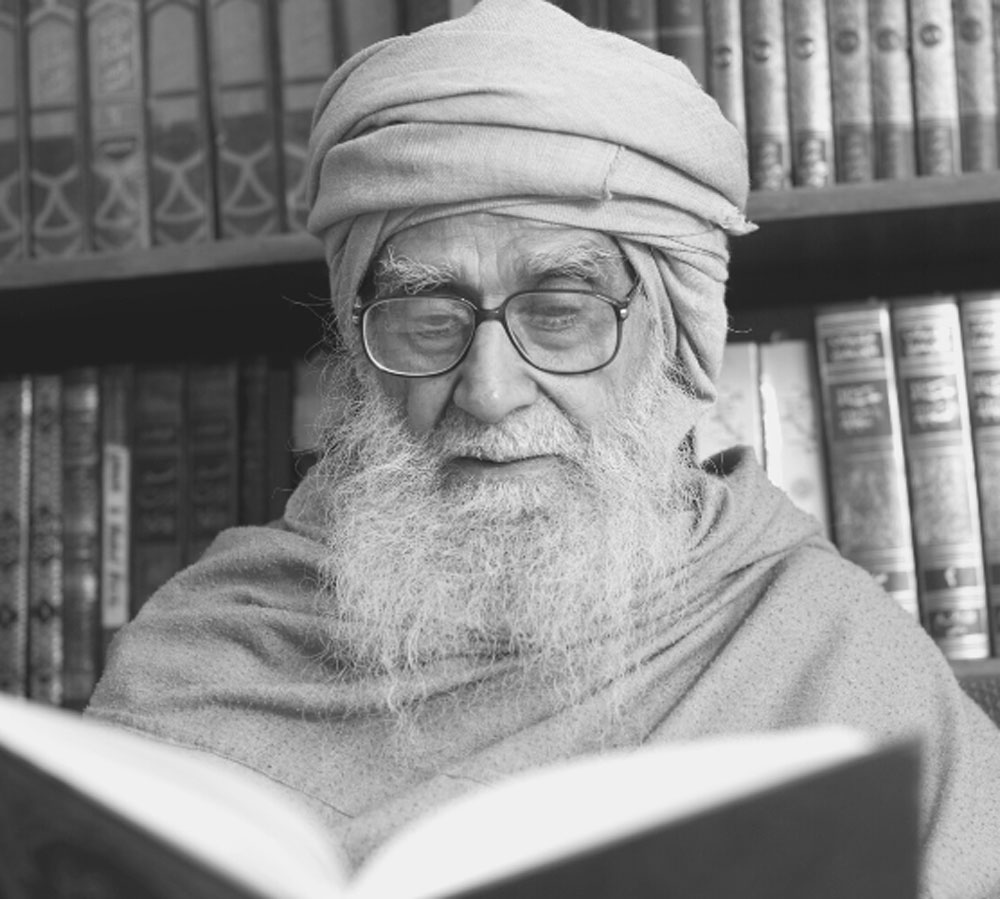
Maulana Jalil Ahsan Nadwi
My interactions with Maulana Jalil Ahsan Nadwi regarding this matter began in February 1962, when he visited Rampur and stayed with Maulana Abdul Hai (Editor of the monthly Al-Hasanat and a member of the Shura Council). That was the first time he saw my writing. Upon learning that Maulana (Jalil Ahsan) had reviewed my work, I went to him to request his feedback. He said that instead of giving an oral response, he preferred to provide his opinion in writing. However, he would need a copy of my document. I agreed, stating that a written review would indeed be more detailed, allowing for a thorough examination and reflection. I immediately promised to provide him with a copy soon.
At that time, Abdul Hai Sahib had lent Maulana my work for review, so he was also very eager to hear Maulana’s feedback. He probed quite persistently, but Maulana remained reticent. After much urging, he only commented:
“Reading this piece left me deeply distressed.”
On March 10, 1962, I sent a copy of my work to Maulana Jalil Ahsan Nadwi. After receiving it, Maulana wrote back, saying he had learned that I intended to further refine my work. Therefore, he requested that I send him the completed version once it was ready so he could provide his feedback. Along with his letter, he returned my original document.
Saraimeer–March 26, 1962
Dear Brother,
Peace be upon you.
I am returning your document and am pleased to hear that you are preparing its final draft, as you mentioned. My advice is that once your final draft is complete, show it to Maulana Sadruddin, Maulana Hamid, Maulana Urooj, and other scholars of Arabic and jurisprudence there. “Accept” their critiques and comments openly. Sticking rigidly to an idea once it is set in your mind is not the path of a seeker of truth. After passing through this phase, let me review it. I am a student, so naturally, I will ask questions, seek explanations, and inquire about the basis of your arguments.
It is also evident, as I mentioned both verbally and in writing, that my approach towards this type of writing is through correspondence, not through direct discussion or dialogue.
When I was in Rampur, I spoke with several individuals there, and they unanimously agreed that once you set your mind on something, any possibility of reconsidering it seems entirely out of the question. May God grant that this is not the case, and that my concerns are also unfounded. But if the situation is as I have heard, and as I fear after reading your work, then this is not the approach of true seekers of truth. You should reflect on this.
Jalil Ahsan
──────────────────
After that, due to the crisis at Madrasatul Islah, the correspondence was put on hold for a while, and Maulana was unable to respond to my letters. In the first week of July 1962, after stepping down from his position at Madrasatul Islah, Maulana Jalil Ahsan came to Rampur for a few days. Here, Maulana Abul Lais spoke with him and persuaded him to respond to my writing. The discussion that followed and its progress are detailed in the correspondence that took place between us during this period.
I wrote to Maulana, mentioning that the Amir Jamaat had informed me of his conversation with you and that you were now willing to comment on my work. I requested that he confirm his willingness so I could send the document to him. In response, I received the following letter:
Chitrpur–July 9, 1962
Dear Brother,
Peace be upon you.
1. Maulana Abul Lais spoke to me in the same way you mentioned in your letter.
2. I replied that, as I have already informed you, I would only be able to proceed in the following way: Once the manuscript is finalized and a copy is sent to me, I will read it, and then, as a student, I will ask questions, seek clarification on points, examine the arguments, and request explanations. This process would be conducted entirely through written correspondence, which will take time. In such correspondence, neither you nor I can impose a strict timeline; patience is essential.
Peace,
Jalil Ahsan
──────────────────
In response, on July 21, I sent a copy of the manuscript to Maulana and requested that he kindly write and send his comments by the end of August. Subsequently, I received the following letter:
Chitrpur–July 25, 1962
Respected Brother Wahiduddin Khan,
Peace be upon you.
Please acknowledge my condition: I will ask questions, and also, understand that I can’t set a time limit.
Accepting these two conditions is necessary for me to even begin reviewing your work. If you cannot agree to this, I will gladly return your document. I have written the same from Madrasatul Islah, but you completely overlooked these points and instead wrote that you were sending the document and insisted that I must provide my comments by the end of August. I must inform you that this is impossible. If I could provide such quick commentary, I would not have repeatedly stressed my conditions. Why are you so impatient? Is impatience the first attribute among the traits of a “true believer”?
Jalil Ahsan
──────────────────
In response, I wrote that Maulana could proceed with the review as he deemed appropriate, as I was eager to know his thoughts on my ideas. Following that, I received the following letter:
Chitrpur–August 7, 1962
Respected Brother,
Peace be upon you.
1. I received your document but have not yet read it.
2. I have heard that you are eager to publish this work. Is this information correct?
3. If so, my advice is that you come to Azamgarh and engage in further correspondence with me. It is possible that your misinterpretation will become clear to you. For someone who is not fully satisfied with Jamaat’s views, the best approach is to quietly distance oneself and pursue religious work in one’s own preferred way. But if you intend to pick up the pen to publish it, turning the pen into a weapon and unleashing criticism, this is not a favourable path. I sincerely advise you not to take this route; the full loss will be yours. As for those whom you consider to be deaf, dumb, and blind according to your belief, they will continue their path, as Allah says, “You cannot guide whoever you please” (28:56).
Although the path I have pointed out is very difficult, it is so because your own self will constantly urge you—day and night, at every moment. It will whisper: enjoining what is right is obligatory; proclaiming, expressing, and spreading the truth is necessary. It may tell you that if you do not do this if you do not strip away the veil of falsehood, you will be guilty of concealing the truth and betrayal. And then your conscience will strongly remind you of the Hereafter—how will you stand before God on that Day and excuse yourself for concealing the truth? With what words will you defend yourself? Alas! Alas! For this reason, the path I have advised is a hard one. But it is still the path you should take.
If, however, you find this completely unacceptable, then why are you gathering people’s comments? In that case, critiques would only be appropriate after the writings are published.
I eagerly await your reply.
Peace,
Jalil Ahsan
Postscript: Once again, I await your reply. Please confirm if this information is accurate. Also, kindly consider my advice and inform me of your intended course of action. If you choose the other path, you may not be able to keep your heart pure, and future reconciliation might be impossible. This path should remain open!
──────────────────
Rampur–August 13, 1962
Respected Maulana,
Peace be upon you.
I received your letter dated August 7. You wrote, “My advice is that you come to Azamgarh, and further correspondence between us may clarify the error in your interpretation.” I accept your advice, and today I am writing to the Amir of Jamaat seeking permission to travel from Rampur to Azamgarh. God willing, I will proceed based on his response, and I will inform you accordingly.
Now, I request that you begin your work. Since I have accepted your advice, I feel entitled to ask that, aside from your essential tasks, you devote all your time to me. Life is uncertain; we do not know when the listener’s time might end or when the speaker’s time will cease.
Please forgive any unintentional offense.
Yours sincerely, Wahiduddin
──────────────────
During this period, Maulana Abdul Hai (Editor of Al-Hasanat) independently sent a letter to Maulana Jalil Ahsan. Although I did not see the letter Maulana Abdul Hai sent, he did give me Maulana’s reply, which reads as follows:
Letter to Maulana Abdul Hai
Chitrpur, August 18, 1962
Respected and Esteemed,
Peace and blessings be upon you.
1. On August 7, I sent a (post) card to Mr. Wahiduddin at the Al-Hasanat address. First, please take that card from him and read it. He responded on August 13th as follows:
Respected and Esteemed,
Peace be upon you.
I received your letter dated August 7, in which you advised, “Come to Azamgarh, and then further correspondence between us might clarify the error in your interpretation.” I accept your advice and am therefore writing to the Amir of Jamaat to seek permission to go to Azamgarh. God willing, once I receive his response, I will act accordingly and inform you as well.
This is Mr. Wahiduddin’s reply. But the only advice in my card was not merely this; another, more significant question was there: I had heard that he is extremely eager to publish his work soon. Not only that, but he wishes to launch a journal, though it seems there is no available funding. Naturally, this information unsettled me. I asked whether this information was correct and inquired about which of the two paths he intended to pursue. I pointed out both paths and suggested which one he should take. So please first read the card and then note that in his response dated August 13, he entirely ignored the most critical question. There is no trace or mention of it in his answer. Why is this? Doesn’t this create reason to question his intentions? If he consciously chose this approach, then it could be called political manoeuvring, something he should avoid, as it contradicts purity of heart. Through you, I request that he address this essential matter—whatever he may have to say, let him say it.
He ended his letter by asking for forgiveness if he caused any unintended offence. In response, I must say that I have always considered it an affront when someone does not answer my questions directly or disregards them, and there is no answer in his answers to my question. If you do not wish to answer a particular question, why not simply state that you will not respond to it? I could then decide what further action to take regarding the matter. But to leave my question unanswered has always struck me as disdainful.
Please convey my greetings to Mr. Wahiduddin Khan and let him know that, if there is any harshness in my card, he should disregard it, as any such harshness was due to his own actions.
Peace be upon you,
Jalil Ahsan
──────────────────
Rampur–September 1, 1962
Respected Maulana Jalil Ahsan,
You have written a letter to Maulana Abdul Hai (dated August 18) and, through his mediation, asked me to respond regarding a particular matter that has been concerning you. You mentioned that you received information suggesting I am eager to publish my essay soon and that I wish to launch a journal but lack the necessary funding. You stated that hearing this news about me has caused you great discomfort.
As for the publication of the essay, if I am reassured by your response, naturally, there will be no question of publishing it. However, if that is not the case, I doubt that you or anyone else would advise me to withhold a truth that I have, after much search and inquiry, ultimately deemed correct.
As for the second point, “I wish to publish a monthly magazine, but I am hindered by a lack of funding, and therefore I am waiting.”—I can only say that this is entirely false. No one could dare to swear upon the Quran, claiming they have heard such words from my lips. Whoever invented this lie must have had a desire to discredit me, but they certainly did not use sound judgment, for the truth is that if I ever decided to launch a journal, other obstacles might arise, but securing funds would certainly not be one of them, Insha’Allah.
I await your response regarding the original text.
Sincerely, Wahiduddin
──────────────────
In reply, I received the following letter from Maulana Jalil Ahsan:
Chitrapur–September 5, 1962
Respected Brother,
Peace be upon you and the mercy of Allah
I received your card dated September 1, in which you wrote, if I could not satisfy you:
“Neither you nor anyone else would likely advise me to withhold something I deem correct after thorough search and inquiry.”
No, it was in precisely that scenario that I advised you to choose the path of silence. When contentment [with the Jamaat] ends, quietly separating oneself and working for the faith independently is a better course. This advice would hold no meaning if one has found contentment. I gave you this advice out of sincere concern for you, and I still hold to it. If people’s hearts are already sealed, there would be no reason to offer such advice—please reflect on this.
The matter of the journal was casually mentioned to me in Azamgarh, just overheard in passing. I am convinced that it was not fabricated with any intent to defame you. However, I consider it my duty to inform the source, after verification, that this information is incorrect and should not be repeated, even casually. Please convey this message to Maulana Abdul Hai on my behalf, and due to the mention of this in my letter, whatever heartburn you have felt, please remove that; scratch that from the bottom and never mention the same with anyone.
Brother Abu Zafar [the author of the book], you have attended my classes and observed my situation well; surely you realize that I possess neither vast knowledge nor profound insight. When Maulana Sadruddin and other scholarly members could not satisfy your concerns, what could you hope to gain from a humble person like me?
The truth is that attaining tranquility requires fulfilling many conditions—some depend on the seeker, while others relate to the process of inquiry. Know this about me: I do not possess real knowledge. And if I have any, it is merely enough to teach a few books to students. Consider me a student, treat me accordingly, and pray for me as I pray for you. After all, who knows whose prayer may benefit whom and at what moment?
Ask me why I am certain that Wahid Sahib will face severe consequences in this matter on the Day of Hereafter.
Peace
Jalil Ahsan
──────────────────
After this, I received a list of questions from him as follows:
Chitrapur–September 6, 1962
Respected Brother,
Peace, mercy, and blessings of Allah be upon you!
Kindly share your understanding of this verse of the Quran (57:25), so that we may benefit from your insights. The questions are as follows:
1. What does bayyinat signify?
2. What is the meaning of al-kitab (the book)?
3. What is intended by mizan (scale) here?
4. What would be the translation of Qama-b?
In al-Hamasah, a renowned anthology of early Arabic poetry, there is a verse that reads:
Idhan la qama binasri masharun khushun (Then a hardy group would have risen to my aid)
what does qiyam bi-nasr mean here?
5. Does an-nas refer to all people or a specific group?
6. What is the concept of qist?
7. What kind of lam is in li-yaqum?
8. Why does the verse mention inzal al-hadid (iron sent down) next?
9. To what is wa-li ya’lam connected?
I have outlined these questions to help you clarify each term and phrase and provide a comprehensive understanding. Additionally, why is the final part included?
The second verse is Chapter Al-Baqarah, verse 129. In it, four tasks have been assigned to the Prophet (e). Is it your understanding that there are three tasks or four? In other words, what do you consider the meaning of reciting verses, teaching the Book, and teaching wisdom? Is purification a separate task, or is it the outcome of the first three tasks? If one were to regard these as the purpose of the Prophet’s mission, would you object to this interpretation? If so, how would you present a correct interpretation?
Another question—some translators render li-takunu shuhada’ ala an-nas as “so that you may be witnesses over the people” or “so that you may bear witness for the people.” My confusion is about what it means to be a “witness over the people.” Either one is a witness for the people or a witness against the people. In the first case, Arabic uses li- (for) and, in the second case, ala (against), and here it is ala. If this is correct, then the translation should be “so that you may be witnesses against the people, and the Messenger may be a witness against you.” This meaning is perplexing—could you clarify this translation?
Peace,
Jalil Ahsan
──────────────────
Rampur–September 11, 1962
Respected Maulana Jalil Ahsan Sahib,
Peace and Blessings
I received your letter dated September 6. I would like to mention that your questions are extremely brief, and it is possible that you are using these questions or references to these verses to counter my perspective. However, this is not evident in your letter; rather, it only contains a few short, general questions. Had you expressed your complete point of view, I would have had more opportunities for reflection and could have responded in more detail. As it stands, your questions are very concise and unclear concerning the primary issue. Naturally, any answers I provide to these questions may also seem inadequate and unclear to you, as I can only answer based on what you have asked, not on the unexpressed thoughts you may still have.
For future correspondence, I request that you please clarify the relationship between the questions and the primary issue, allowing me to better understand your perspective on the main matter and respond accordingly.
Below, I am addressing your questions:
Chapter Al-Hadid, Verse 25
1. By bayyinat, I understand the same meaning that Allama Alusi and other commentators have mentioned—namely, clear proofs and miracles.
2. “Al-kitab” refers to revelation, as Al-Zamakhshari has noted in his Al-Kashshaf.
3. Regarding “mizan,” Alauddin al-Khazin describes it in his commentary as al-‘adl, meaning “justice,” that is, “We commanded with justice.”
4. The translation of “liyaqum al-naas bi-al-qist,” as given by Shah Waliullah, is “so that people may uphold justice,” and as explained in Tafsir Al-Khazin, it means “so that they may deal justly with one another” (liyata’amalu bainahum bil-‘adl).
5. In the mentioned verse, qiyam bi-nasr means reaching to aid during hardship—in other words, defence.
6. Al-naas here refers to people in general, as there appears to be no evidence for any specific limitation.
7. Qist signifies justice; in Imam Razi’s words: “It is to grant others the same share as you would take for yourself” (Tafsir al-Razi, Vol. 8, p. 101).
8. The lam in appears to be one of purpose.
9. The mention of inzal al-hadid is understood in light of the words that follow; i.e., it provides strength in times of battle and similarly proves to be a great support to humanity in other needs.
10. In the commentary al-Jalalayn, “wa li-ya‘lama Allah” is interpreted as being connected to “li-yaquma al-nas”. However, it may also be understood as coordinated with “anzalna al-hadid”. In that case, an implicit clause must be assumed—namely, “so that they may use it, and so that Allah may know…” (see Tafsir Abu al-Su‘ud, Vol. 8, p. 212). In my opinion, both interpretations are reasonable.
11. The “final phrase” serves as an expression of divine will, emphasizing that in the struggle between a Prophet and his opponents, the faithful are obliged to support the Prophet against the Prophet’s adversaries.
Chapter Al-Baqarah, Verse 129
1. When the Quran employs four distinct words, it most likely implies four distinct tasks.
2. I concur with Allama Alusi’s explanation of these four terms (Ruh al-Ma’ani, Vol. 1, pp. 386-387).
3. If one were to consider this the purpose of the Prophet’s mission, I would have no objection to this interpretation.
“Litakunu shuhadaa ‘ala al-naas”
The distinction you outlined between shuhada with the preposition li- (for) and shuhada with ‘ala (against) is accurate in general usage, but it is not absolute. The preposition ‘ala can also be used in the context of general testimony, whether favorable or unfavorable (e.g., shahida fulan ‘ala fulan bihaqq, meaning “so-and-so testified for so-and-so with truth,” Lisan al-Arab). Accepting this general meaning of shuhada ‘ala, the translations provided by Urdu translators are not subject to the objection you mentioned in your letter.
Yours sincerely,
Wahiduddin
──────────────────
After this, I received Maulana’s second questionnaire. This questionnaire, too, consisted merely of questions, without any consideration given to my prior request to clarify the relevance of the questions to the primary issue. A copy of the questionnaire is as follows:
Dear Brother! Peace and Blessings,
I received your letter dated September 9 on the 17th. In my opinion, you did not address my letter of September 6 fairly. At the outset, I requested that you share your understanding of verse 25 of Chapter Al-Hadid with me. I then presented my questions and finally noted that these questions were posed for your convenience so you could elaborate clearly on their meaning. However, you treated the questions as primary and provided answers to them rather than writing the commentary of the verse. (It’s rather peculiar that the Maulana is merely content with the questions himself and is requesting a commentary from me–the Author). Nevertheless, here are some questions that arise from your responses, as well as some additional new ones:
1. By bayyinat, do you mean arguments supporting prophethood, monotheism, and resurrection, or something else? From my studies, it seems that the commentators generally interpret hujaj (proofs) as referring to these three types of arguments, though I do not have a specific reference in mind.
2. If hujaj refers to the part of revelation that contains these three types of arguments, does kitab then refer to the remainder of the revelation, such as laws, stories, and so on, or to some specific portion?
3. You understand mizan to mean justice, and in explaining its meaning, you wrote ai amarna bil-‘adl, which I interpret to mean: “We commanded the messengers to act justly, without wrongdoing.” Is this your intended meaning, or something else?
4. The translation of liyaqum al-naas bil-qist as “so that people may uphold justice” is not clear to me. In Arabic, the preposition ‘ala is generally used when referring to establishing something, not bi-Qam bil-amr translates to “undertaking,” and tawalla means “to remain firm upon something,” or is it something else? Please refer to the appropriate lexicons, as I do not have them available here.
5. In connection to Chapter Al-Baqarah, verse 129, you mentioned the four tasks per Alusi’s commentary. Now that you are in Azamgarh, and Alusi’s commentary of the Quran is only available at Shibli Manzil, could you please identify these four tasks in the context of the Quran rather than simply Allusi’s interpretation?
6. Regarding shahid, I didn’t understand the Lisan al-Arab reference, shahida fulan ‘ala fulan bihaqq. Is there a contextual explanation in that entry? Please explain what this means.
7. In Chapter Al-Baqarah (2:143), what does the waw in wa kadhalik relate to, and what is the referent for dhalik?
8. The term wasat generally means middle, and wasatun signifies the central part of something. How does this term come to mean “best”? Is the central part of your table, for instance, better than the rest? Secondly, if it means “best,” why use wasat instead of simply using the term khayr (goodness)?
9. Is the plural shuhada derived from shaahid or shaheed? How many meanings exist for shaheed and shaahid in classical Arabic?
10. In ja’alnakum, who does kum refer to?
Jalil Ahsan
──────────────────
Azamgarh–October 5, 1962
Respected Maulana Jalil Ahsan Sahib,
Greetings of Peace,
I received your letter dated September 18 (copy). I wish to address an earlier condition you had set regarding sharing your opinion on the topic under discussion, which was that you would “ask questions.” I understood this to mean that you would pose questions about the arguments and conclusions in the paper I sent you, following which you would offer your perspective on the core issue. However, when I received your first questionnaire on September 6, I noticed that it was quite different from what I had anticipated. It contained several of completely general questions, similar to the kind students encounter in exams, and you had not explained their connection to the main discussion. I did not find this style of questioning favourable; nevertheless, as a matter of courtesy, I provided answers to the questions and sent them back to you. This second questionnaire, which I have now received, is essentially of the same nature. I might still have found a way to reconcile with it, considering that although I find this method unsuited or irrelevant to my viewpoint, I would nonetheless continue responding to whatever you ask. However, after sending my responses to the first questionnaire, I happened to come across a handwritten letter from the Amir Jamaat, addressed to a prominent central figure. In this letter, he wrote the following regarding our correspondence:
“Maulana Jalil Ahsan has also initiated correspondence with Khan Sahib (Wahiduddin). However, I hardly expect Khan Sahib to endure Maulana’s style or method of correspondence... In any case, I have informed Jalil Ahsan Sahib to complete whatever he wishes to “teach” as quickly as possible...”
The final sentence of this excerpt was particularly distressing for me. When I look at your “questions” considering this, it seems as though I am indeed being “taught” or “instructed.” With regret, I must request that you please refrain from adopting this instructional tone and instead share your perspective on the core issue along with any relevant arguments you might have. This will allow me to reflect on the primary issue considering this information.
Yours sincerely,
Wahiduddin
──────────────────
Since my letter referenced a letter by Maulana Abul Lais Sahib, Maulana Jalil Ahsan subsequently wrote to Maulana Abul Lais Sahib to inquire about it. Consequently, I received the following letter from Maulana Abul Lais Sahib:
Delhi–October 2, 1962
Dear Brother, Peace be upon you,
Today I received a letter from Maulana Jalil Ahsan Sahib, indicating that you had referenced my letter in your correspondence with him, requesting that he set aside the instructional tone and directly share his perspective on the issue at hand. While he has not mentioned whether he is willing to do so or not, I suspect that he considers his method of correspondence to be the most productive approach for examining the matter under discussion, and he will likely persist in it. Therefore, if you genuinely wish to benefit from his insights on this issue, it would be advisable for you to continue the correspondence with him. As for the matter of the “instructional” tone, which has somewhat dissuaded you from further correspondence, I trust that my recent letter should have helped to clear up any misunderstanding regarding this term, God willing (this letter is part of the Amir Jamaat’s correspondence).
Maulana Jalil has also mentioned in his letter that the questions he sent to you are certainly not irrelevant—neither the ones in the first questionnaire nor those in the second. Nevertheless, if their relevance is not apparent, you are welcome to seek clarification from him.
──────────────────